
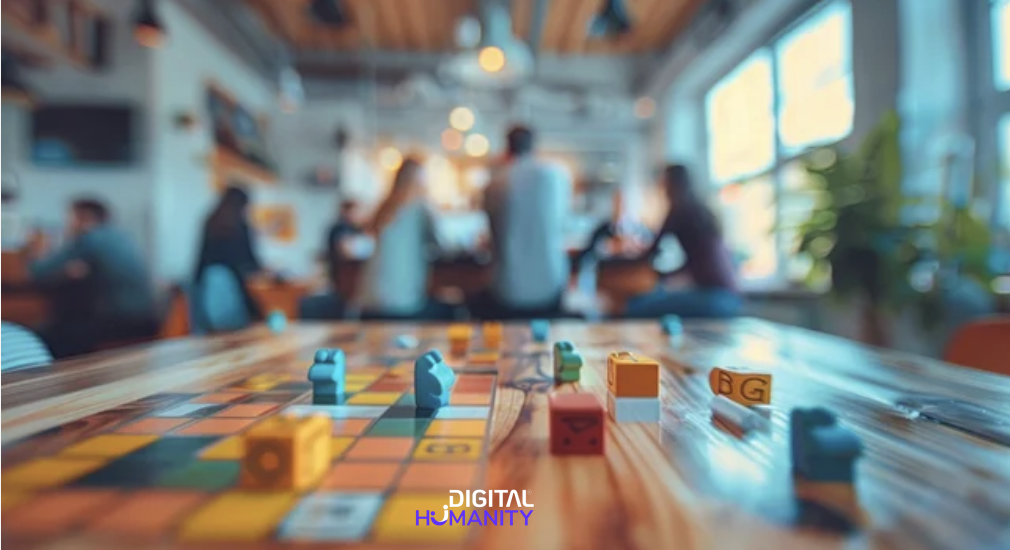
Good news: gameplay may do more than help you dodge your messages.
Research suggests board and video games can support learning, problem-solving, mood, and social connection. But before calling six hours of gaming a wellness plan, remember:
The game matters. How you play matters. What you take from it matters.
Purposeful play can be powerful. Your brain likes a challenge.
Games give your brain something it loves: low-stakes practice.
Bad move? Try again. Wrong strategy? Adjust. Big loss? That’s feedback.
Whether negotiating at a board game or competing online, games can build skills like:
• Decision-making
• Problem-solving
• Attention and working memory
• Strategic thinking
• Communication
• Emotional recovery after failure
With goals, feedback, challenge, and rewards, games can make practice feel less like homework.
Board Games: Low-Tech, High Brainpower
Do not underestimate board games.
Research links some board games to stronger knowledge retention, attention, working memory, social interaction, and problem-solving.
Educational games can help people remember information by making them repeatedly use it instead of simply hearing it.
Board games also create something valuable in a screen-heavy world:
Actual human interaction.
Players talk, negotiate, cooperate, read the room, handle disagreement, wait their turn, and recover when plans fall apart.
That is social learning disguised as fun.
A short discussion afterward—What happened? Why did you decide that? What would you change?—can deepen the learning.
Video Games Aren’t Just Button Mashing
Video games offer different strengths.
Some games may support visual-spatial skills, planning, persistence, emotional regulation, teamwork, and problem-solving.
The genre matters.
Action games can build spatial awareness and visual processing. Strategy games challenge planning. Cooperative games encourage communication, coordination, and teamwork.
Even casual games may help: brief sessions have been linked to better mood, relaxation, and reduced anxiety.
Gaming also offers a realistic lesson:
You fail. A lot.
Then you restart.
That cycle—challenge, failure, adjustment, retry—helps players practice recovering from frustration.
Useful skill—especially when adulthood keeps adding surprise levels.
But Games Are Not Magic
This is where the hype needs to slow down.
Research does not show that every game makes you smarter or turns you into a productivity superhero.
The strongest evidence is for skills directly practiced during play.
Play a game requiring spatial reasoning? You may improve spatial skills.
Play a game teaching health information? You may remember more health information.
Excessive or unhealthy gaming can affect sleep, exercise, schoolwork, relationships, or mental health. Content, time, age, setting, accessibility, and balance matter.
The Power Move: Play With Purpose
If designing a workshop, class, conference activity, or team program, start with one question:
What do we want people to practice?
Then choose the game.
Want better communication and connection? Try cooperative board games plus discussion.
Want people to remember technical or professional information? Use a content-based game.
Want to practice decision-making? Bring in strategy.
Want teamwork and coordination? Multiplayer gaming may fit.
After the game, do not just move on.
Ask:
What happened? What did you notice? What would you do differently?
That reflection is where play can become learning.
Bottom Line
Games do not replace education, counseling, exercise, relationships, or healthy habits.
But they can be surprisingly effective tools for practicing skills that matter.
Sometimes your brain does not need another lecture, webinar, or 47-slide deck.
Sometimes it needs permission to play, experiment, fail, laugh, reset—and try again.
Enjoyed this article? Follow and subscribe to stay connected. #Gameplay #Gamesforlife #BrainHealth #Burnoutprevention #Digitalhumanity #PoweredToPerform #BrainWellness